Project: Color Grids

Due: , 11:59pm
At a Glance: Create two “color grids” and two compositions based on the first color grid and your composition thumbnails according to the instructions below.
Working Size: 11 × 14 in. paper (mixed media pad)
JPG Size: 1920px at its longest dimension, no larger than 3MB
Submit via: Google Slides and in class

Brief

Color Grid

You will create one color grid following these instructions:

  • Create one color chart building off of Itten’s contrast of value grid.
  • This grid will consist of 156 squares (13 × 13 grid), each square measuring 0.5 inches in height and width (the entire grid will be 6.5 × 6.5 inches).
  • Draw the grid with your ruler and pencil first.
  • The bottom row of the grid is black, and the top row is white.
  • The far left column is gray and the far right column is violet.
  • You would fill in the rest of the squares appropriately to create regular gradations. See figure 1 below.

Linguistic Color Grid

Your second color grid follows these instructions:

  • Create a second “color” grid using only language.
  • This will consist of 25 squares (5 × 5 grid), each square measuring approximately 1 inch in height and width (the entire grid will be approximately 5 inches square).
  • The bottom row of the grid should be variations on black names, and the top row variations on white names.
  • The far left column names should deal with reds/magentas, the next column oranges, the next column, yellows, the next column greens, and the last column blues/cyans. You can use the Imaginary Color Name Generator to come up with fun names, or you can do so on your own.
  • You will fill in the rest of the squares appropriately to create a gradation and amalgam of names. See figure 2 below. Mix the colors linguistically—blending neighboring squares’ language—or conceptually—blending the general concepts.
  • You may write and draw this grid by hand, or digitally.

Color Compositions

Your remaining two works should each be be no smaller than 10 inches at their smallest dimension. You will base these compositions on two of your composition thumbnails and they will each explore one of the principles from these color contrasts:

  • Contrast of Hue
  • Cool-Warm Contrast
  • Complementary Contrast
  • Simultaneous Contrast
  • Contrast of Saturation

These two new works will be in color, taking their color from your first newly made color grid (above). All color should be pre-mixed on the palette before applying it to the paper—i.e., no wet-on-wet mixing on the paper. All colors should be flat (no smooth gradients) and cleanly butt up against adjacent colors. You may augment the original thumbnails and add new details since those were meant to be quick sketches that set out the major areas of light and dark.

Materials

  • 3 sheets of 11 × 14 in. paper (mixed media pad)
  • Ruler
  • Pencil
  • Micron pen (if you opt to write/draw the linguistic color grid by hand)
  • Acrylic paints
  • Painter’s knife
  • Brushes
  • Disposable palette
  • Cups or jars for water
  • Rags or paper towels for clean up
  • Soap or shampoo for cleaning brushes
  • Optional:
    • Blue tape to stretch the paper or make clean lines in the painting

Examples
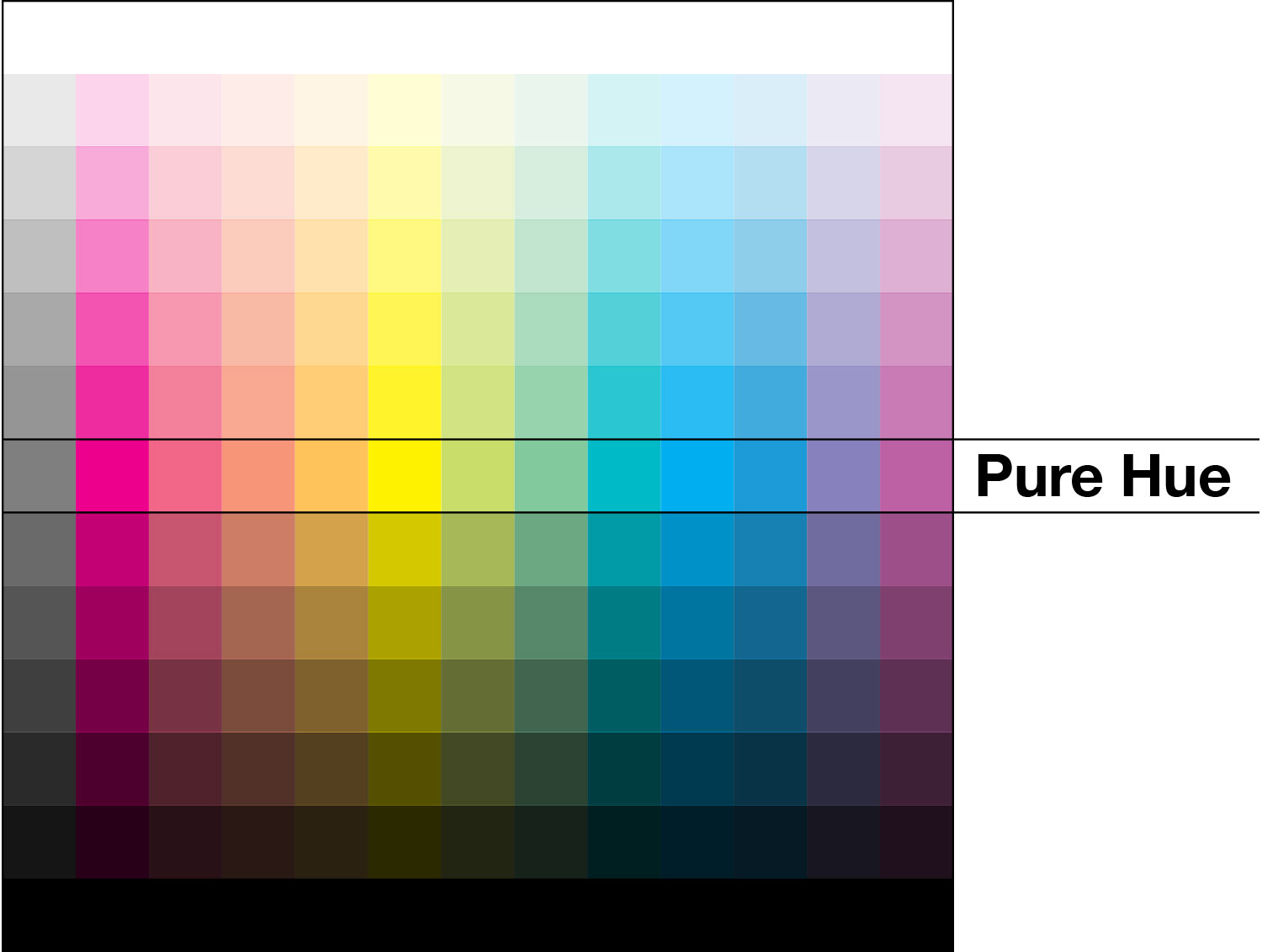
Color Chart

Figure 1: Contrast of Value Grid

Linguistic Color Chart

Figure 2: Linguistic color chart

Deliverable

Upload your images to the Google Slides template (see link at top of the page) for this assignment under your name.

Grading

Assignment grades will be based on the following:

Aesthetic Principles (40%)

Student demonstrates evidence that they understand and inventively integrate aesthetic principles.

  • Excellent: Student employs the aesthetic principles addressed in class to create work that is individual and engaging.
  • Average: Student is able to rotely employ the principles addressed in class to create a standard project, but not make it their own.
  • Below Average: Student struggles to demonstrate a grasp of the principles and shows no facility in internalizing the ideas.
Labor and Technique (40%)

Student works fastidiously to apply appropriate techniques to the project and shows a growing facility with those techniques. The student’s labor is evident and ample given the allotted time.

  • Excellent: Student understands demonstrated techniques and nimbly employs them in their work.
  • Average: Student makes some stylistic and technical mistakes by ignoring provided guidance.
  • Below Average: Student repeatedly makes the same mistakes and ignores instructor input and suggestions.
Following Instructions (10%)

The student adheres to the guidelines provided for the course and the assignment. If the project has a particular framework, the student adheres to that framework. If an assignment is to be submitted on a Google Slide, the student does not email the instructor a JPG.

  • Excellent: A detail-oriented student who takes instruction and fastidiously executes it within their work.
  • Average: A student who misses some details because they didn’t read instructions thoroughly or take proper notes when instructions were given.
  • Below Average: Student ignores basic instructions and guidance given for assignments.
Reflection (10%)

Student notes on critiques along with personal reflection on their projects show a growing sense of awareness of how their work can be received and understood.

  • Excellent: Student diligently takes notes during critiques, noting the core concerns of the critics, and expresses their own views thoughtful and honest self assessment.
  • Average: Student’s critique notes address only surface concerns and/or their own self reflection writing is hurried and vague.
  • Below Average: Student does not take good notes and their self assessment is incomplete or dishonest.
On-time Submission

Work that is not present for a synchronous critique, or is too late for an asynchronous critique will lose points under the Reflection category for not having notes from the critique.

Why?

To familiarize you with working in color, this assignment is training your eye and your mind to work through how different colors are mixed, and how they impact one another when juxtaposed in compositions. This is also an exercise in precision where the colors butt up against each other in clean, graphic lines. In addition, this is a way to explore how language impacts our perception of color.

Learning Outcomes Addressed

Spatial Skills

Students will be able to generate, organize and communicate ideas in two-dimensional space using basic principles of color and composition.

Technical Skills

Students will be able to employ various digital and analog techniques to realize and evaluate aesthetic compositions.

Aesthetic Sensibilities

Students will be able to create two-dimensional compositions of varying sensibilities and articulate their appreciation of others’ art.
Project: 10,000 Marks

Due: , 9:00am
At a Glance: Create three drawings—one with 100 marks, another with 2,000 marks, and a third with 10,000 marks—12,100 marks in total.
Working Size: 11 × 14 in. paper (mixed media pad)
JPG Size: 1920px at its longest dimension, no larger than 3MB
Submit via: Google Slides and in class

Brief

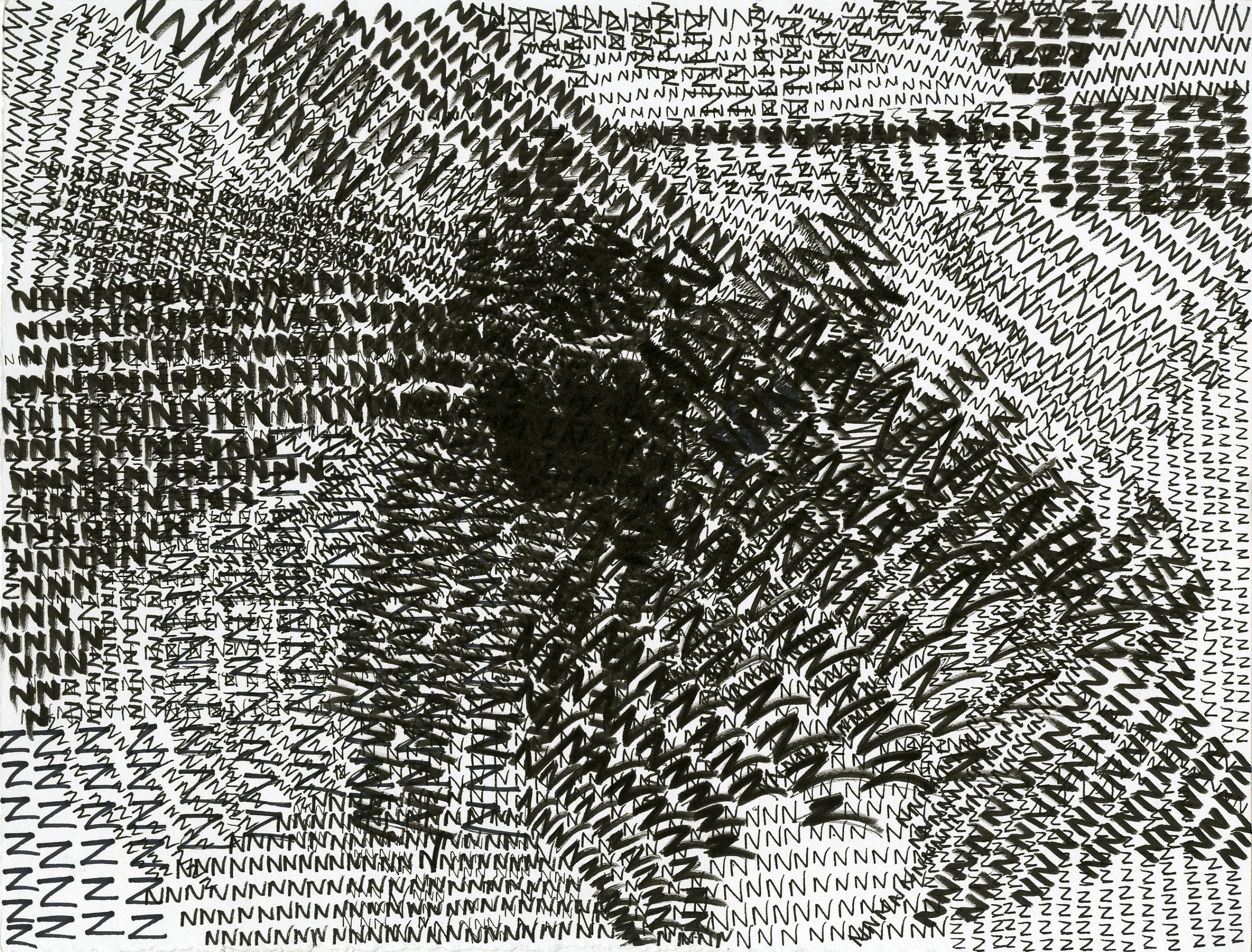
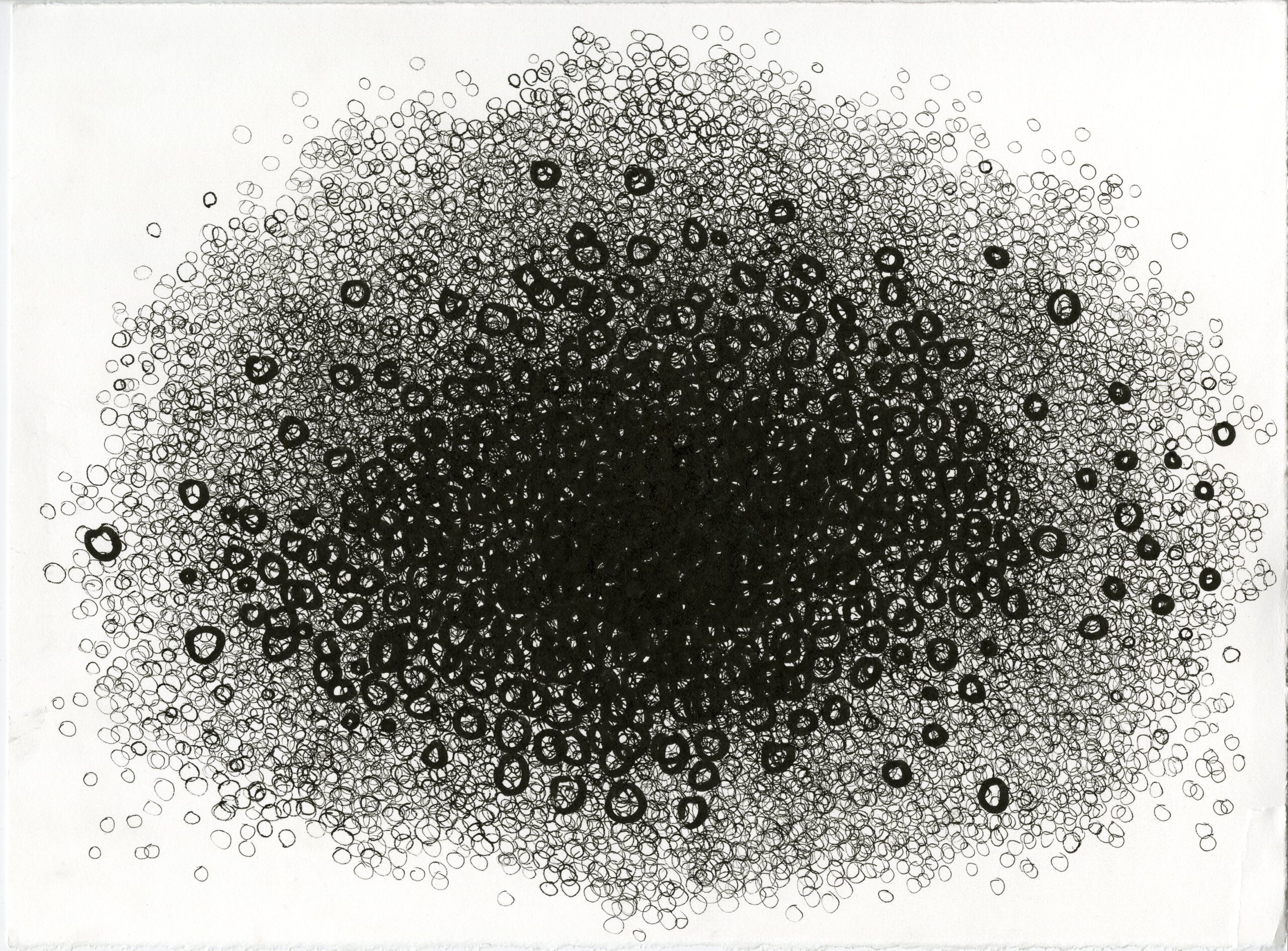
This is an assignment about repetition and forms of rhythm and pattern. Although there is an element of monotony to this, there is also an aspect of meditation and training. You can embrace all of it.

  1. Decide on a mark that you can make with your pen. It could be a circle, a check mark, a zig zag. Whatever you choose make it simple and easy on your hand because you will be making a lot of them.
  2. All marks should be black only.
  3. Make a composition on your first sheet of paper using only 100 of your chosen mark. You can vary the size, placement, or value of the mark. Do not attempt to make a recognizable image. Put the first mark down and then the next responding as you go.
  4. Make a new composition on a second piece of paper using 2,000 marks.
  5. Make a composition on a third piece of paper using 10,000 marks. The 10,000 mark image takes about 3 hours to complete. You will have to find a system to count the marks as you go rather than trying to count them up later! We are working on the honor system here. The instructor will not break out a magnifying glass and a calculator to tabulate the marks.

Each composition will have different characteristics depending on the amount of marks and how you decide to vary the mark. Because you are using the same mark throughout, your composition will have unity. Because of the shifts in value, size, and placement of the marks, the composition will have variety. Use the same mark for all three compositions. You can overlap marks to create more congested, and therefore darker areas.

Look to your fifty composition thumbnails for inspiration, but remain responsive to what is happening on your paper. Think about gestalt and different composition formats. Think of how your eye might move through the composition.

Materials

  • 3 sheets of 11 × 14 in. paper (mixed media pad)
  • Micron pen
  • Listen to the following podcasts as you work to break up the monotony and prep for the next class on color theory:
  • Optional:
    • Sharpie or other permanent marker, and/or black acrylic paint for thicker lines

Examples

10,000 Marks

10,000 Marks

Deliverable

Upload your images to the Google Slides template (see link at top of the page) for this assignment under your name.

Grading

Assignment grades will be based on the following:

Aesthetic Principles (40%)

Student demonstrates evidence that they understand and inventively integrate aesthetic principles.

  • Excellent: Student employs the aesthetic principles addressed in class to create work that is individual and engaging.
  • Average: Student is able to rotely employ the principles addressed in class to create a standard project, but not make it their own.
  • Below Average: Student struggles to demonstrate a grasp of the principles and shows no facility in internalizing the ideas.
Labor and Technique (40%)

Student works fastidiously to apply appropriate techniques to the project and shows a growing facility with those techniques. The student’s labor is evident and ample given the allotted time.

  • Excellent: Student understands demonstrated techniques and nimbly employs them in their work.
  • Average: Student makes some stylistic and technical mistakes by ignoring provided guidance.
  • Below Average: Student repeatedly makes the same mistakes and ignores instructor input and suggestions.
Following Instructions (10%)

The student adheres to the guidelines provided for the course and the assignment. If the project has a particular framework, the student adheres to that framework. If an assignment is to be submitted on a Google Slide, the student does not email the instructor a JPG.

  • Excellent: A detail-oriented student who takes instruction and fastidiously executes it within their work.
  • Average: A student who misses some details because they didn’t read instructions thoroughly or take proper notes when instructions were given.
  • Below Average: Student ignores basic instructions and guidance given for assignments.
Reflection (10%)

Student notes on critiques along with personal reflection on their projects show a growing sense of awareness of how their work can be received and understood.

  • Excellent: Student diligently takes notes during critiques, noting the core concerns of the critics, and expresses their own views thoughtful and honest self assessment.
  • Average: Student’s critique notes address only surface concerns and/or their own self reflection writing is hurried and vague.
  • Below Average: Student does not take good notes and their self assessment is incomplete or dishonest.
On-time Submission

Work that is not present for a synchronous critique, or is too late for an asynchronous critique will lose points under the Reflection category for not having notes from the critique.

Why?

This is partly to train your hand and mind in doing a deep dive on an artwork. It is also another way to think of a composition—as a series of tiny parts/marks rather than a few planes.

Learning Outcomes Addressed

Spatial Skills

Students will be able to generate, organize and communicate ideas in two-dimensional space using basic principles of color and composition.

Technical Skills

Students will be able to employ various digital and analog techniques to realize and evaluate aesthetic compositions.

Aesthetic Sensibilities

Students will be able to create two-dimensional compositions of varying sensibilities and articulate their appreciation of others’ art.
Project: Composition Thumbnails

Due: , 9:00am
At a Glance: Create 50 black-and-white compositional thumbnails (small sketches/paintings). See details below.
Working Size: Each no smaller than 2.5 in. at the longest dimension
JPG Size: Paper sheet, 1920px at its longest dimension, no larger than 3MB (don’t photograph each thumbnail separately)
Submit via: Google Slides and in class

Brief

Create 50 different compositional thumbnails, each no smaller than 2.5 in. at longest dimension. You should have multiple thumbnails on each piece of paper (to conserve paper). Use only 4 opaque values (black, white, and two shades of gray)—the same 4 values throughout all 50 compositions.

  • 10 rectangle (horizontal) picture planes
  • 10 rectangle (vertical) picture planes
  • 10 square picture planes
  • 10 circle (tondo) picture planes
  • 10 triangle picture planes (equilateral, isosceles, scalene, acute, obtuse, right, whatever)

Consider the compositional formats. I don’t require you to use these a particular number of times, but try to use each of them at least once per compositional group.

  • armatures—fifths, fourths, thirds, and the golden mean
  • symmetrical
  • asymmetrical
  • open
  • closed
  • all over

Work quickly and intuitively—partly so you don’t spend too much time on this, but also so your paint doesn’t dry out. If you don’t like a composition, paint over it or collage over it. Not all of these need to be your favorite compositions, just explorations of options. You don’t need to create a rigid grid with a ruler unless you want to. You can sketch out the picture planes with a pencil, or just make them with the paint as you go. Leave a small, white margin between each picture shape.

Tips

  • If this is your first time working with acrylic paint, be aware that it dries fairly quickly. That means that if you aren’t using your brush for longer than 30 seconds, put it in your jar of water. Once the paint dries in the bristles, it can be difficult if not impossible to get out and your brush is ruined.
  • If you need to leave your paints and you haven’t used them all, you can preserve them by misting them lightly with a spray bottle and then covering your palette with some plastic wrap. Otherwise, the paint will harden and you cannot reconstitute it.
    • Alternately, you can use your leftover paint on a separate painting, or smear your paint across a piece of paper to use in a collage later. I always have a side painting where I deposit my leftover paint.

Materials

  • 11 × 14 in. paper (mixed media pad)
    • You should be able to fit all compositions on about 3 sheets of paper.
  • Black and white acrylic paint
  • Brushes
  • Painter’s knife
  • Disposable palette
  • Cups or jars for water
  • Rags or paper towels for clean up
  • Soap or shampoo for cleaning brushes
  • Optional:
    • Painter’s tape
    • Pencil(s)

Deliverable

Upload your images to the Google Slides template (see link at top of the page) for this assignment under your name.

Grading

Assignment grades will be based on the following:

Aesthetic Principles (40%)

Student demonstrates evidence that they understand and inventively integrate aesthetic principles.

  • Excellent: Student employs the aesthetic principles addressed in class to create work that is individual and engaging.
  • Average: Student is able to rotely employ the principles addressed in class to create a standard project, but not make it their own.
  • Below Average: Student struggles to demonstrate a grasp of the principles and shows no facility in internalizing the ideas.
Labor and Technique (40%)

Student works fastidiously to apply appropriate techniques to the project and shows a growing facility with those techniques. The student’s labor is evident and ample given the allotted time.

  • Excellent: Student understands demonstrated techniques and nimbly employs them in their work.
  • Average: Student makes some stylistic and technical mistakes by ignoring provided guidance.
  • Below Average: Student repeatedly makes the same mistakes and ignores instructor input and suggestions.
Following Instructions (10%)

The student adheres to the guidelines provided for the course and the assignment. If the project has a particular framework, the student adheres to that framework. If an assignment is to be submitted on a Google Slide, the student does not email the instructor a JPG.

  • Excellent: A detail-oriented student who takes instruction and fastidiously executes it within their work.
  • Average: A student who misses some details because they didn’t read instructions thoroughly or take proper notes when instructions were given.
  • Below Average: Student ignores basic instructions and guidance given for assignments.
Reflection (10%)

Student notes on critiques along with personal reflection on their projects show a growing sense of awareness of how their work can be received and understood.

  • Excellent: Student diligently takes notes during critiques, noting the core concerns of the critics, and expresses their own views thoughtful and honest self assessment.
  • Average: Student’s critique notes address only surface concerns and/or their own self reflection writing is hurried and vague.
  • Below Average: Student does not take good notes and their self assessment is incomplete or dishonest.
On-time Submission

Work that is not present for a synchronous critique, or is too late for an asynchronous critique will lose points under the Reflection category for not having notes from the critique.

Why?

This project is a quick and easy way to explore more compositional options while introducing the idea of a thumbnail—a small sketch to establish shapes and values in a picture plane.

Learning Outcomes Addressed

Spatial Skills

Students will be able to generate, organize and communicate ideas in two-dimensional space using basic principles of color and composition.

Technical Skills

Students will be able to employ various digital and analog techniques to realize and evaluate aesthetic compositions.

Aesthetic Sensibilities

Students will be able to create two-dimensional compositions of varying sensibilities and articulate their appreciation of others’ art.
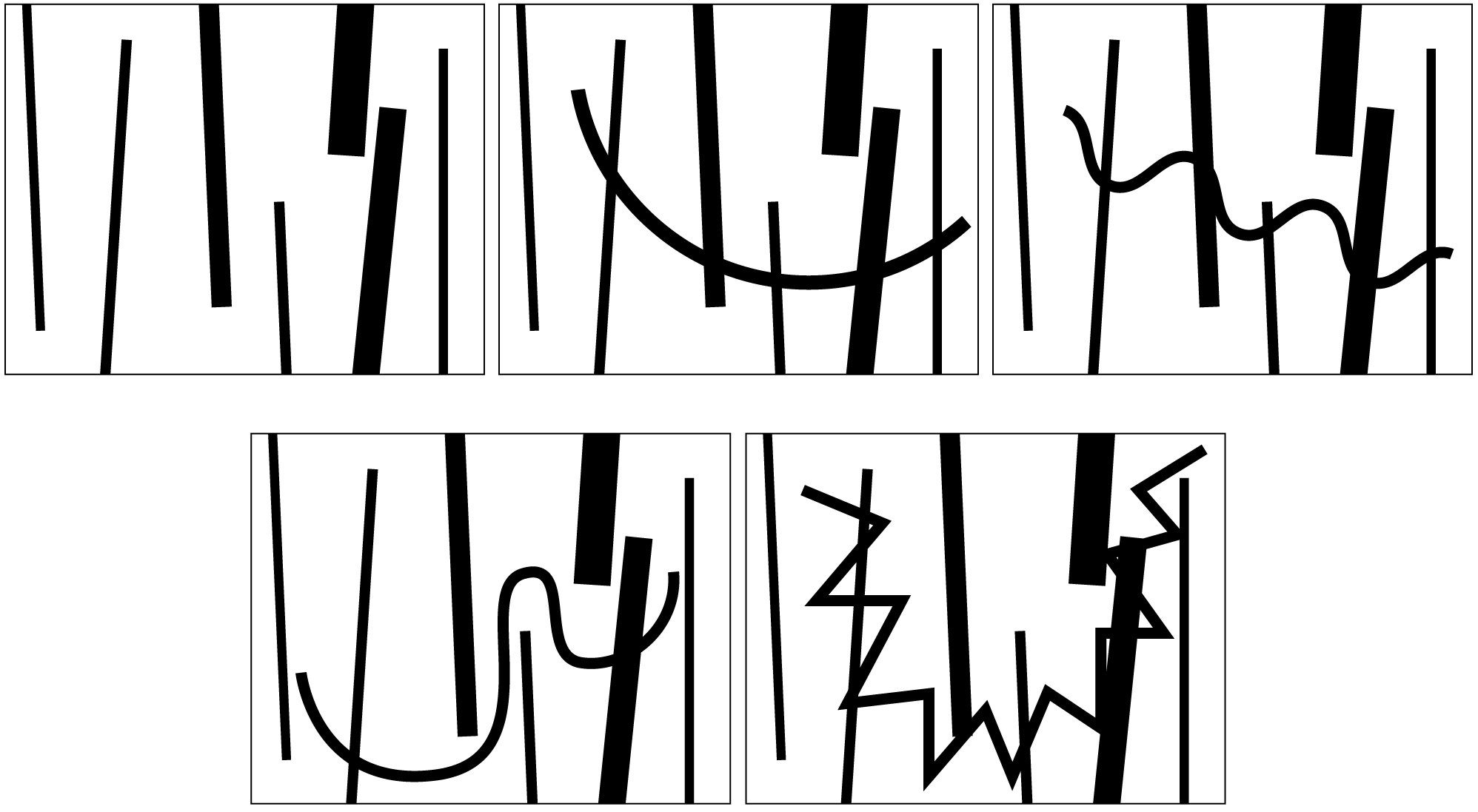
Exam 1: Gestalt, Composition, Dot, Line, and Plane

Due: , 11:59am
Detail: This exam covers material from the presentations on the first day of class: gestalt, composition, dot, line, and plane.
Exam Location: Learning Suite

Brief

This exam covers material pertinent to gestalt, composition, dot, line, and plane presented on the first day of class. This exam is “open book,” meaning that you may refer to your notes, the PDF of the presentations, and the video recording of the presentations (available via the “Resources” link at the top of the page under “Course Box.”) You may save, exit, and return to the exam. It is not timed. You may take the exam twice, and Learning Suite will save your highest score.

Learning Outcomes Addressed

Spatial Skills

Students will be able to generate, organize and communicate ideas in two-dimensional space using basic principles of color and composition.

Aesthetic Sensibilties

Students will be able to create two-dimensional compositions of varying sensibilities and articulate their appreciation of others’ art.
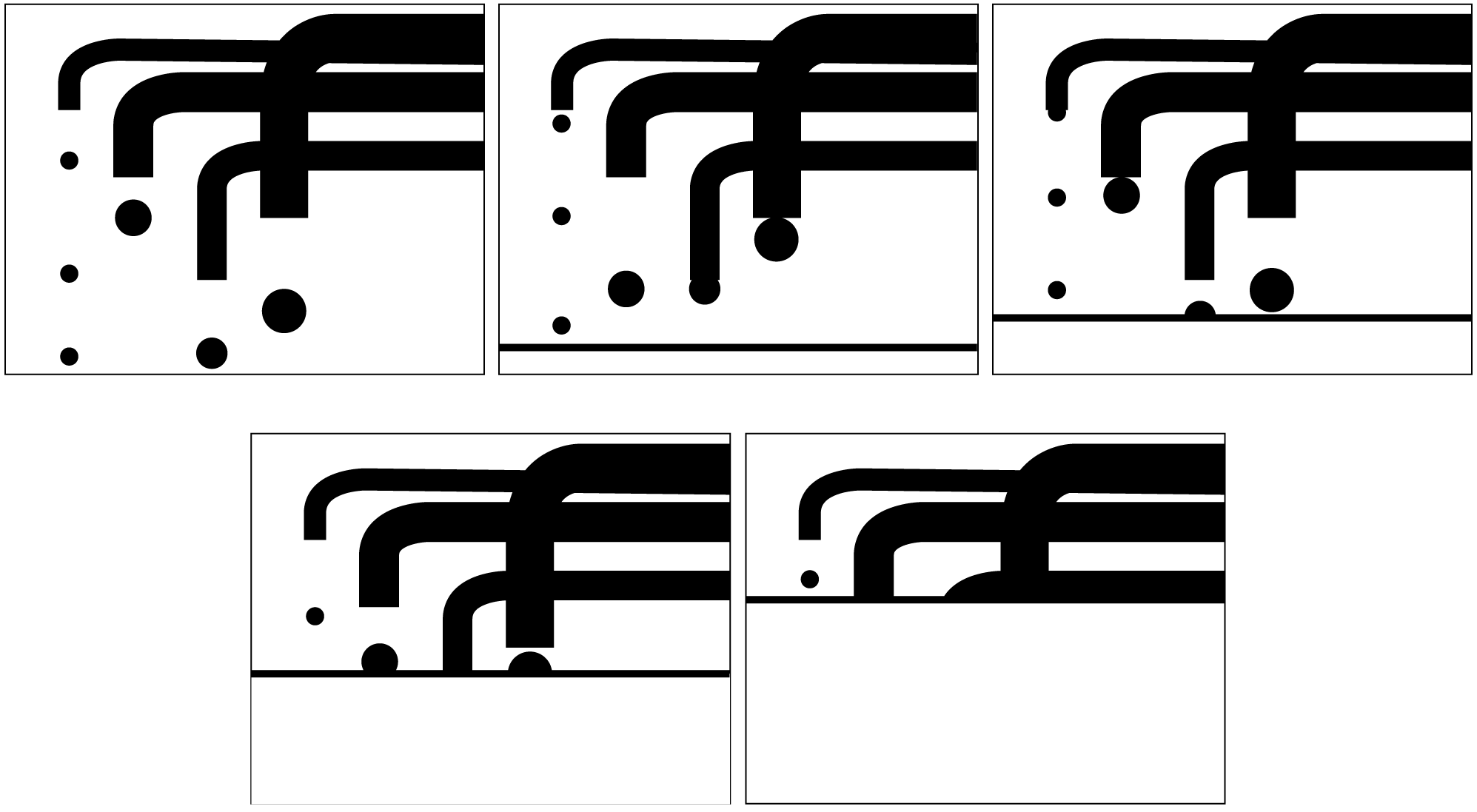
Project: Gestalt

Due: , 9:00am (this project is due at the beginning of class so we can critique it in class; if you are late to class, the assignment is late)
At a Glance: Create five black-and-white compositions. See details below.
Working Size: 9 × 12 in. each (this is the paper size, use as much of the paper as you can) (horizontal or vertical)
JPG Size: 1920px at its longest dimension, no larger than 3MB
Submit via: Google Slides and in class

Brief

Searching the internet or magazines, find some objects that have a visual interest for you. Using silhouettes of these objects, create five black-and-white (no gray) compositions that each employ the following:

  • At least two different principles of gestalt:
    • Figure Ground
    • Proximity
    • Similarity (Good Form)
    • Invariance
    • Good Continuation (Continuity)
    • Closure (Reification)
    • Order (Symmetry)
    • Multi-Stability
    • Common Fate
    • Past Experience
  • At least one form of geometric armature:
    • Golden Ratio (1.618:1)
    • Fifths
    • Quarters
    • Thirds
  • One of the following composition formats:
    • Open
    • Closed
    • All over

For example, you may opt to produce the following compositions:

  • Composition 1
    • Gestalt: Invariance and Common Fate
    • Armature: Golden Ratio
    • Composition: All Over
  • Composition 2
    • Gestalt: Proximity and Order (Symmetry)
    • Armature: Thirds
    • Composition: Closed
  • Composition 3
    • Gestalt: Closure (Reification) and Figure Ground
    • Armature: Fifths
    • Composition: Open
  • Composition 4
    • Gestalt: Good Continuation and Proximity
    • Armature: Fourths
    • Composition: Open
  • Composition 5
    • Gestalt: Common Fate and Similarity
    • Armature: Thirds
    • Composition: Closed

You may include and/or alter the interior detail of the objects if you wish. For example, if you select a person’s head, you can just have a black silhouette of their head, or include some details of the face, or change the interior to a pattern. Feel free to enlarge or shrink the silhouetes, rotate them, overlap/combine them, crop them, and so on.

Tips

  • If this is your first time working with acrylic paint, be aware that it dries fairly quickly. That means that if you aren’t using your brush for longer than 30 seconds, put it in your jar of water. Once the paint dries in the bristles, it can be difficult if not impossible to get out and your brush is ruined.
  • If you need to leave your paints and you haven’t used them all, you can preserve them by misting them lightly with a spray bottle and then covering your palette with some plastic wrap. Otherwise, the paint will harden and you cannot reconstitute it.
    • Alternately, you can use your leftover paint on a separate painting, or smear your paint across a piece of paper to use in a collage later. I always have a side painting where I deposit my leftover paint.

Materials

  • 9 × 12 in. paper (sketchbook)
    • Note: the 9 × 12 format does not jibe with the Golden Ratio, so feel free to trim the paper to acccommodate, or draw a rectanglar picture plane within paper that adheres to the ratio
  • Black acrylic paint
  • Brushes
  • Disposable palette
  • Cups or jars for water
  • Rags or paper towels for clean up
  • Soap or shampoo for cleaning brushes
  • Optional:
    • Black paper
    • White acrylic paint
    • Scissors and glue stick for collage

Deliverable

Upload your images to the Google Slides template (see link at top of the page) for this assignment under your name.

Grading

Assignment grades will be based on the following:

Aesthetic Principles (40%)

Student demonstrates evidence that they understand and inventively integrate aesthetic principles.

  • Excellent: Student employs the aesthetic principles addressed in class to create work that is individual and engaging.
  • Average: Student is able to rotely employ the principles addressed in class to create a standard project, but not make it their own.
  • Below Average: Student struggles to demonstrate a grasp of the principles and shows no facility in internalizing the ideas.
Labor and Technique (40%)

Student works fastidiously to apply appropriate techniques to the project and shows a growing facility with those techniques. The student’s labor is evident and ample given the allotted time.

  • Excellent: Student understands demonstrated techniques and nimbly employs them in their work.
  • Average: Student makes some stylistic and technical mistakes by ignoring provided guidance.
  • Below Average: Student repeatedly makes the same mistakes and ignores instructor input and suggestions.
Following Instructions (10%)

The student adheres to the guidelines provided for the course and the assignment. If the project has a particular framework, the student adheres to that framework. If an assignment is to be submitted on a Google Slide, the student does not email the instructor a JPG.

  • Excellent: A detail-oriented student who takes instruction and fastidiously executes it within their work.
  • Average: A student who misses some details because they didn’t read instructions thoroughly or take proper notes when instructions were given.
  • Below Average: Student ignores basic instructions and guidance given for assignments.
Reflection (10%)

Student notes on critiques along with personal reflection on their projects show a growing sense of awareness of how their work can be received and understood.

  • Excellent: Student diligently takes notes during critiques, noting the core concerns of the critics, and expresses their own views thoughtful and honest self assessment.
  • Average: Student’s critique notes address only surface concerns and/or their own self reflection writing is hurried and vague.
  • Below Average: Student does not take good notes and their self assessment is incomplete or dishonest.
On-time Submission

Work that is not present for a synchronous critique, or is too late for an asynchronous critique will lose points under the Reflection category for not having notes from the critique. Work that is submitted late will lose 5 points per 24-hour period that it is late. For example, if an assignment is submitted 5 minutes late, it will lose 5 points. If it is submitted 23 hours late, it will lose 5 points. If it is submitted 25 hours late, it will have lost 10 points total.

Why?

This project is designed to help students solidify their knowledge of and recognize gestalt principles, armatures, and compositional types in art. It is also a hands-on way to explore dot, line, and plane without the complications of texture, color, or other elements of design.

Learning Outcomes Addressed

Spatial Skills

Students will be able to generate, organize and communicate ideas in two-dimensional space using basic principles of color and composition.

Technical Skills

Students will be able to employ various digital and analog techniques to realize and evaluate aesthetic compositions.

Aesthetic Sensibilities

Students will be able to create two-dimensional compositions of varying sensibilities and articulate their appreciation of others’ art.

Project: Dot and Line Stories

Due: , 11:59pm
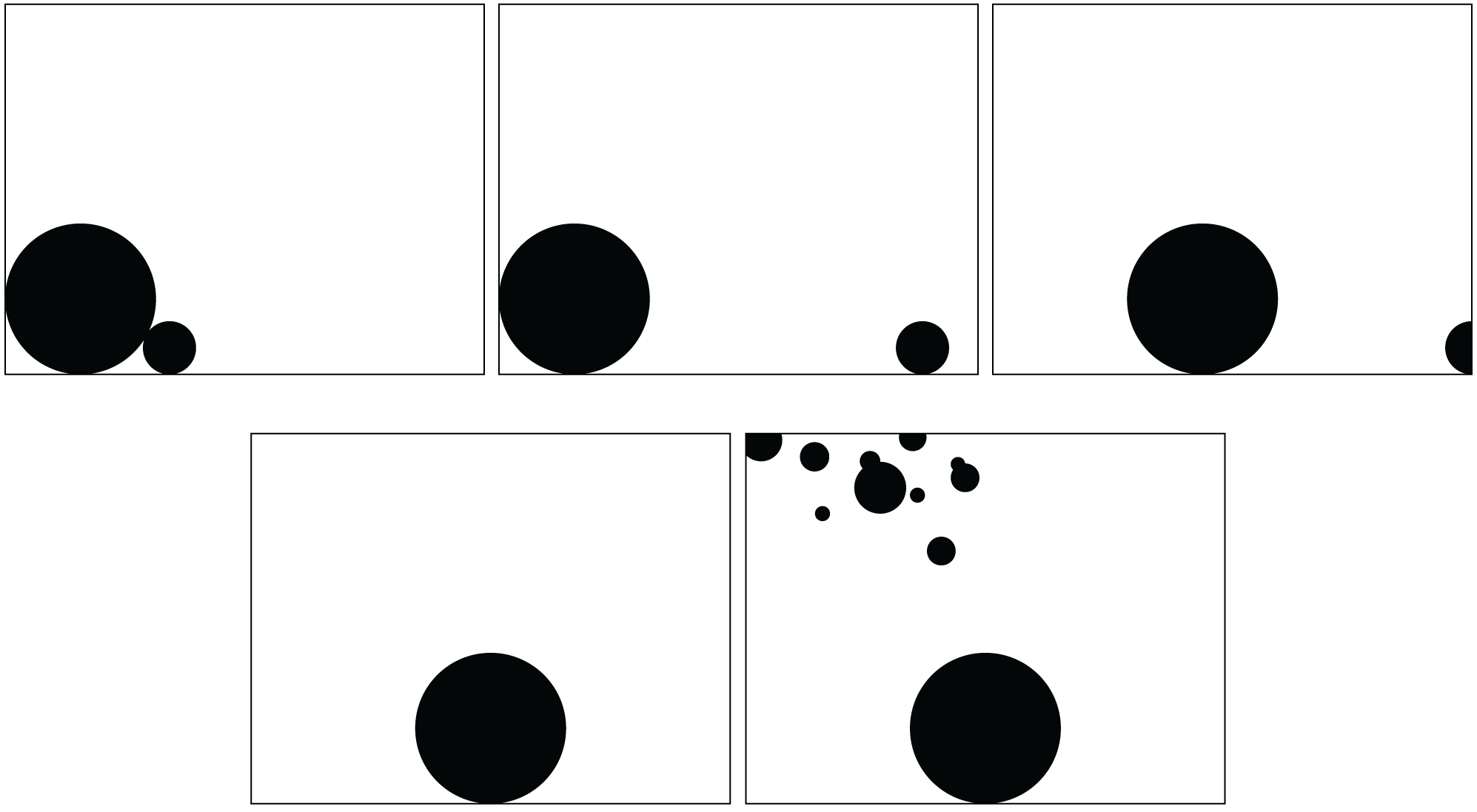
At a Glance: 15 images total: 5 images of a dot story, 5 images of a line story, 5 images of a dot and line story.
JPG Size: 1920px at its longest dimension, no larger than 3MB
Submit via: Google Slides

Brief

This assignment takes place during class time. Create three visual stories of five images each using black dots and lines on white paper:

  • Five images that tell a story depicting the relationship between dots.
  • Five images that tell a story depicting the relationship between lines.
  • Five images that tell a story depicting the relationship between both dots and lines.

The same dots and lines may be reused and moved around the paper to create diferent compositions that will be documented through digital photography. Make an effort to explore the different types of compositions—open and closed, dynamic and static, and symmetrical and asymmetrical—and exploring the armature of the rectangle. Take many, many photographs, then edit it down to the five images you find most compelling for each of your stories. Feel free to orient your image plane to be landscape (horizontally oriented), portrait (vertically oriented), or square.

Materials

  • White paper—any white paper will do
  • Black paper, or paper made black with pencil, ink, or paint
  • Scissors or X-acto knife

Examples

Dot Story

Dot Story

Dot Story

Line Story

Line Story

Dot and Line Story

Dot and Line Story

Grading

Assignment grades will be based on the following:

Aesthetic Principles (40%)

Student demonstrates evidence that they understand and inventively integrate aesthetic principles.

  • Excellent: Student employs the aesthetic principles addressed in class to create work that is individual and engaging.
  • Average: Student is able to rotely employ the principles addressed in class to create a standard project, but not make it their own.
  • Below Average: Student struggles to demonstrate a grasp of the principles and shows no facility in internalizing the ideas.
Labor and Technique (40%)

Student works fastidiously to apply appropriate techniques to the project and shows a growing facility with those techniques. The student’s labor is evident and ample given the allotted time.

  • Excellent: Student understands demonstrated techniques and nimbly employs them in their work.
  • Average: Student makes some stylistic and technical mistakes by ignoring provided guidance.
  • Below Average: Student repeatedly makes the same mistakes and ignores instructor input and suggestions.
Following Instructions (10%)

The student adheres to the guidelines provided for the course and the assignment. If the project has a particular framework, the student adheres to that framework. If an assignment is to be submitted on a Google Slide, the student does not email the instructor a JPG.

  • Excellent: A detail-oriented student who takes instruction and fastidiously executes it within their work.
  • Average: A student who misses some details because they didn’t read instructions thoroughly or take proper notes when instructions were given.
  • Below Average: Student ignores basic instructions and guidance given for assignments.
Reflection (10%)

Student notes on critiques along with personal reflection on their projects show a growing sense of awareness of how their work can be received and understood.

  • Excellent: Student diligently takes notes during critiques, noting the core concerns of the critics, and expresses their own views thoughtful and honest self assessment.
  • Average: Student’s critique notes address only surface concerns and/or their own self reflection writing is hurried and vague.
  • Below Average: Student does not take good notes and their self assessment is incomplete or dishonest.
On-time Submission

Work that is not present for a synchronous critique, or is too late for an asynchronous critique will lose points under the Reflection category for not having notes from the critique.

Why?

This project is meant to initiate students into the dynamics of compositions and some of the basic elements of design. Since it is a low-cost method that doesn’t require committing images to paper through paint, pencil, or glue, compositions can be explored quickly and easily without feeling too invested or nervous.

Learning Outcomes Addressed

Spatial Skills

Students will be able to generate, organize and communicate ideas in two-dimensional space using basic principles of color and composition.

Technical Skills

Students will be able to employ various digital and analog techniques to realize and evaluate aesthetic compositions.

Aesthetic Sensibilities

Students will be able to create two-dimensional compositions of varying sensibilities and articulate their appreciation of others’ art.

Exam: Know Your Syllabus

Due: , 11:59pm
Detail: A short exam covering material found in the course syllabus.
Found on: Learning Suite

Brief

This exam will cover material found in the syllabus and is open “book.” This means you can be looking through the syllabus as you take the exam. The object is to familiarize each student with the course policies, expectations, and location of pertinent information.