Project: Portfolio

Due: , 11:59pm
At a Glance: Assemble all your course work and reflections into your Portfolio Google Slides document and include your own reflection on your development over the semester.
Submit via: Paste the link for your Google Slides document to Learning Suite

Brief

To revisit the semester and create an aggregate of all of your work, take all the slides from the previous assignments and copy and paste them into your Google Slides template (linked above). Since you have advanced in your knowledge of photographing and color correcting work, you should rephotograph your work or edit the old photographs to make them as best you can.

You will also write a reflection on your progress over the semester, indicating what you are better at and what you would still like to improve. This is worth 10% of your grade—equal to your final project—so don’t skimp on your image corrections or your reflection.

Deliverable

Upload all of your images to the Google Slides template (see link at top of the page) for this assignment. You will need to make a copy of the template since this should feature only your work. You will then share a publically accessible link to the portfolio on Learning Suite. Instructions are on the first slide of the template.

Grading

Assignment grades will be based on the following:

Aesthetic Principles (40%)

Student demonstrates evidence that they understand and inventively integrate aesthetic principles.

  • Excellent: Student employs the aesthetic principles addressed in class to create work that is individual and engaging.
  • Average: Student is able to rotely employ the principles addressed in class to create a standard project, but not make it their own.
  • Below Average: Student struggles to demonstrate a grasp of the principles and shows no facility in internalizing the ideas.
Labor and Technique (40%)

Student works fastidiously to apply appropriate techniques to the project and shows a growing facility with those techniques. The student’s labor is evident and ample given the allotted time.

  • Excellent: Student understands demonstrated techniques and nimbly employs them in their work.
  • Average: Student makes some stylistic and technical mistakes by ignoring provided guidance.
  • Below Average: Student repeatedly makes the same mistakes and ignores instructor input and suggestions.
Following Instructions (10%)

The student adheres to the guidelines provided for the course and the assignment. If the project has a particular framework, the student adheres to that framework. If an assignment is to be submitted on a Google Slide, the student does not email the instructor a JPG.

  • Excellent: A detail-oriented student who takes instruction and fastidiously executes it within their work.
  • Average: A student who misses some details because they didn’t read instructions thoroughly or take proper notes when instructions were given.
  • Below Average: Student ignores basic instructions and guidance given for assignments.
Reflection (10%)

Student notes on critiques along with personal reflection on their projects show a growing sense of awareness of how their work can be received and understood.

  • Excellent: Student diligently takes notes during critiques, noting the core concerns of the critics, and expresses their own views thoughtful and honest self assessment.
  • Average: Student’s critique notes address only surface concerns and/or their own self reflection writing is hurried and vague.
  • Below Average: Student does not take good notes and their self assessment is incomplete or dishonest.
On-time Submission

No late work is acccepted for the Portfolio or Final.

Why?

This project is to help you understand your progress and for the instructor to see how you assess yourself.

Learning Outcomes Addressed

Spatial Skills

Students will be able to generate, organize and communicate ideas in two-dimensional space using basic principles of color and composition.

Technical Skills

Students will be able to employ various digital and analog techniques to realize and evaluate aesthetic compositions.

Aesthetic Sensibilities

Students will be able to create two-dimensional compositions of varying sensibilities and articulate their appreciation of others’ art.
Project: Final

Due: , 11:59pm
At a Glance: Complete a series of three-to-five ambitious works that show off what you have learned this semester.
Submit via: Google Slides

Brief

We have covered a lot of territory this semester and you have picked up a lot off new knowledge and skills. This is a chance to create more individually-driven work. You will submit three-to-five ambitious new pieces that show off what you have learned this semester. This can be representational or non-representational. The dimensions are up to you, but the amount of work you put into the projects should be commmensurate with the amount of time given. Remember, it is often better to create additional works and then edit down to the best images.

You will first email the instructor a proposal outlining your project—scope, medium(s), concepts, etc.—so the instructor knows how to best help you and to make sure the project is suitable. Email the information to the instructor by the date indicated on the schedule.

Deliverable

Upload all of your images to the Google Slides template (see link at top of the page) for this assignment under your name. Add or subtract slides as needed.

Grading

Assignment grades will be based on the following:

Aesthetic Principles (40%)

Student demonstrates evidence that they understand and inventively integrate aesthetic principles.

  • Excellent: Student employs the aesthetic principles addressed in class to create work that is individual and engaging.
  • Average: Student is able to rotely employ the principles addressed in class to create a standard project, but not make it their own.
  • Below Average: Student struggles to demonstrate a grasp of the principles and shows no facility in internalizing the ideas.
Labor and Technique (40%)

Student works fastidiously to apply appropriate techniques to the project and shows a growing facility with those techniques. The student’s labor is evident and ample given the allotted time.

  • Excellent: Student understands demonstrated techniques and nimbly employs them in their work.
  • Average: Student makes some stylistic and technical mistakes by ignoring provided guidance.
  • Below Average: Student repeatedly makes the same mistakes and ignores instructor input and suggestions.
Following Instructions (10%)

The student adheres to the guidelines provided for the course and the assignment. If the project has a particular framework, the student adheres to that framework. If an assignment is to be submitted on a Google Slide, the student does not email the instructor a JPG.

  • Excellent: A detail-oriented student who takes instruction and fastidiously executes it within their work.
  • Average: A student who misses some details because they didn’t read instructions thoroughly or take proper notes when instructions were given.
  • Below Average: Student ignores basic instructions and guidance given for assignments.
Reflection (10%)

Student notes on critiques along with personal reflection on their projects show a growing sense of awareness of how their work can be received and understood.

  • Excellent: Student diligently takes notes during critiques, noting the core concerns of the critics, and expresses their own views thoughtful and honest self assessment.
  • Average: Student’s critique notes address only surface concerns and/or their own self reflection writing is hurried and vague.
  • Below Average: Student does not take good notes and their self assessment is incomplete or dishonest.
On-time Submission

No late work is acccepted for the Portfolio or Final.

Why?

This project is to help you grow more as an indiviual artist by applying your skills to your own ideas.

Learning Outcomes Addressed

Spatial Skills

Students will be able to generate, organize and communicate ideas in two-dimensional space using basic principles of color and composition.

Technical Skills

Students will be able to employ various digital and analog techniques to realize and evaluate aesthetic compositions.

Aesthetic Sensibilities

Students will be able to create two-dimensional compositions of varying sensibilities and articulate their appreciation of others’ art.
Project: Aesthetic Tennis

Due: , 11:59pm
At a Glance: Create eight different collaborative compositions on aggie.io.
JPG Size: 1920px at its longest dimension, no larger than 3MB
Submit via: Google Slides and in class

Brief

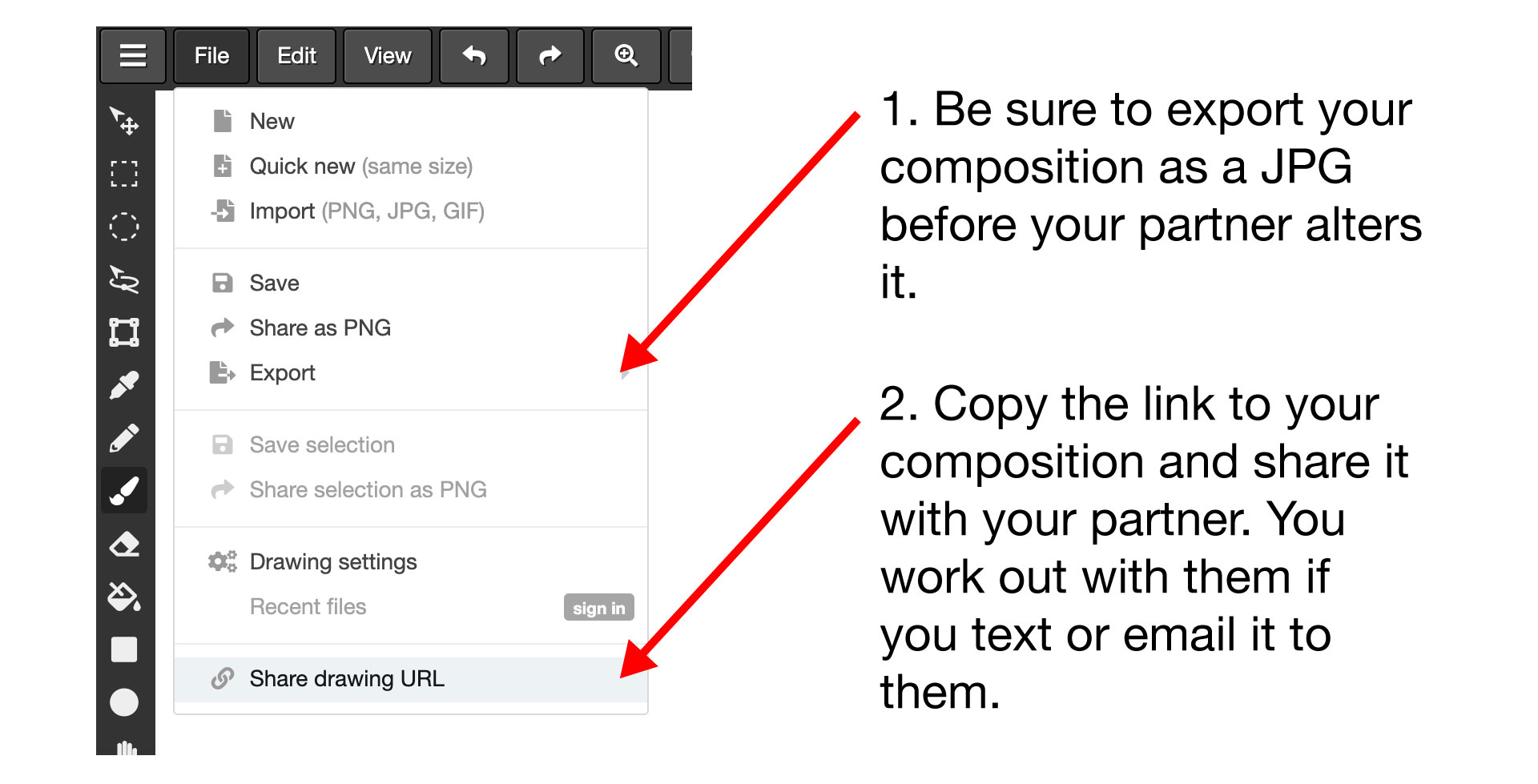
You are paired with another classmate (see list in the Google Slides template). Each of you will create one digital composition on aggie.io, export it as a JPG, and then and swap links with your partner—you will give them a link to yours and they will give you a link to theirs. You will alter that composition into something you feel is resolved, export that as a JPG and swap links with your partner again. You will do this until you have completed eight compositions between the two of you. Upload under your name on the Google Slide template all four compositions that you completed—your initial composition plus the three collaborative works. The Google Slides template indicates that you should present the images as the occurred—partner A, then partner B, then back to A, then ending with B; then the next round.

aggie.io instructions

Deliverable

Upload your images to the Google Slides template (see link at top of the page) for this assignment under your name.

Grading

Assignment grades will be based on the following:

Aesthetic Principles (40%)

Student demonstrates evidence that they understand and inventively integrate aesthetic principles.

  • Excellent: Student employs the aesthetic principles addressed in class to create work that is individual and engaging.
  • Average: Student is able to rotely employ the principles addressed in class to create a standard project, but not make it their own.
  • Below Average: Student struggles to demonstrate a grasp of the principles and shows no facility in internalizing the ideas.
Labor and Technique (40%)

Student works fastidiously to apply appropriate techniques to the project and shows a growing facility with those techniques. The student’s labor is evident and ample given the allotted time.

  • Excellent: Student understands demonstrated techniques and nimbly employs them in their work.
  • Average: Student makes some stylistic and technical mistakes by ignoring provided guidance.
  • Below Average: Student repeatedly makes the same mistakes and ignores instructor input and suggestions.
Following Instructions (10%)

The student adheres to the guidelines provided for the course and the assignment. If the project has a particular framework, the student adheres to that framework. If an assignment is to be submitted on a Google Slide, the student does not email the instructor a JPG.

  • Excellent: A detail-oriented student who takes instruction and fastidiously executes it within their work.
  • Average: A student who misses some details because they didn’t read instructions thoroughly or take proper notes when instructions were given.
  • Below Average: Student ignores basic instructions and guidance given for assignments.
Reflection (10%)

Student notes on critiques along with personal reflection on their projects show a growing sense of awareness of how their work can be received and understood.

  • Excellent: Student diligently takes notes during critiques, noting the core concerns of the critics, and expresses their own views thoughtful and honest self assessment.
  • Average: Student’s critique notes address only surface concerns and/or their own self reflection writing is hurried and vague.
  • Below Average: Student does not take good notes and their self assessment is incomplete or dishonest.
On-time Submission

Work that is not present for a synchronous critique, or is too late for an asynchronous critique will lose points under the Reflection category for not having notes from the critique.

Why?

Working collaboratively opens up creative possibilities, plus poses unique problems to solve.

Learning Outcomes Addressed

Spatial Skills

Students will be able to generate, organize and communicate ideas in two-dimensional space using basic principles of color and composition.

Technical Skills

Students will be able to employ various digital and analog techniques to realize and evaluate aesthetic compositions.

Aesthetic Sensibilities

Students will be able to create two-dimensional compositions of varying sensibilities and articulate their appreciation of others’ art.
Exam 3: Color Theory and Elements of Design, part 2

Due: , 11:59am
Detail: This exam covers additive color theory and elements of design.
Exam Location: Learning Suite

Brief

This exam covers material pertinent to additive color theory and elements of design presented in class. This exam is “open book,” meaning that you may refer to your notes, the PDF of the presentations, and the video recording of the presentations (available via the “Resources” link at the top of the page under “Course Box.”) You may save, exit, and return to the exam. It is not timed. You may take the exam twice, and Learning Suite will save your highest score.

Learning Outcomes Addressed

Spatial Skills

Students will be able to generate, organize and communicate ideas in two-dimensional space using basic principles of color and composition.

Aesthetic Sensibilties

Students will be able to create two-dimensional compositions of varying sensibilities and articulate their appreciation of others’ art.
Project: Color Matching Collection

Due: , 11:59pm
At a Glance: Create a collection of at least fifty colors from your world. See details below.
Working Size: It is up to you.
JPG Size: 1920px at its longest dimension, no larger than 3MB
Submit via: Google Slides and in class

Brief

Look around your world and make a collection of fifty colors and choose a mode of display and compositional aesthetic that is appropriate to the subject matter or method of collection. You color collection should ultimately be painted and be faithfully matched from the source(s).

You can go on a walk, look around your room, skim through your photo reel, catalog your breakfast cereal, take note of every face mask you see, or any number of things to collect your colors. Make sure there is a theme to your colors—it can be as loose as what you see on a fifteen-minute walk through your neighborhood, or as focused as the color of all the eyes in your family. Then choose the way you will present those colors. Will it be a grid on a wall or a series of small painted cardboard tiles? You could make a small zine, or a series of t-shirts. Maybe the size of the color will mimic its prevalence when you saw it—a giant swath of blue for the sky, but a tiny mark for the color of a hard hat in the distance. Maybe your color will take the shape of the object you saw it on, or perhaps you will keep it abstract. These decisions are up to you, but you should let your theme dictate some of these decisions so your idea is carried throughout the artwork.

Materials

  • Acrylic paints
  • Painter’s knife
  • Brushes
  • Disposable palette
  • Cups or jars for water
  • Rags or paper towels for clean up
  • Soap or shampoo for cleaning brushes
  • Other materials appropriate to your project

Example

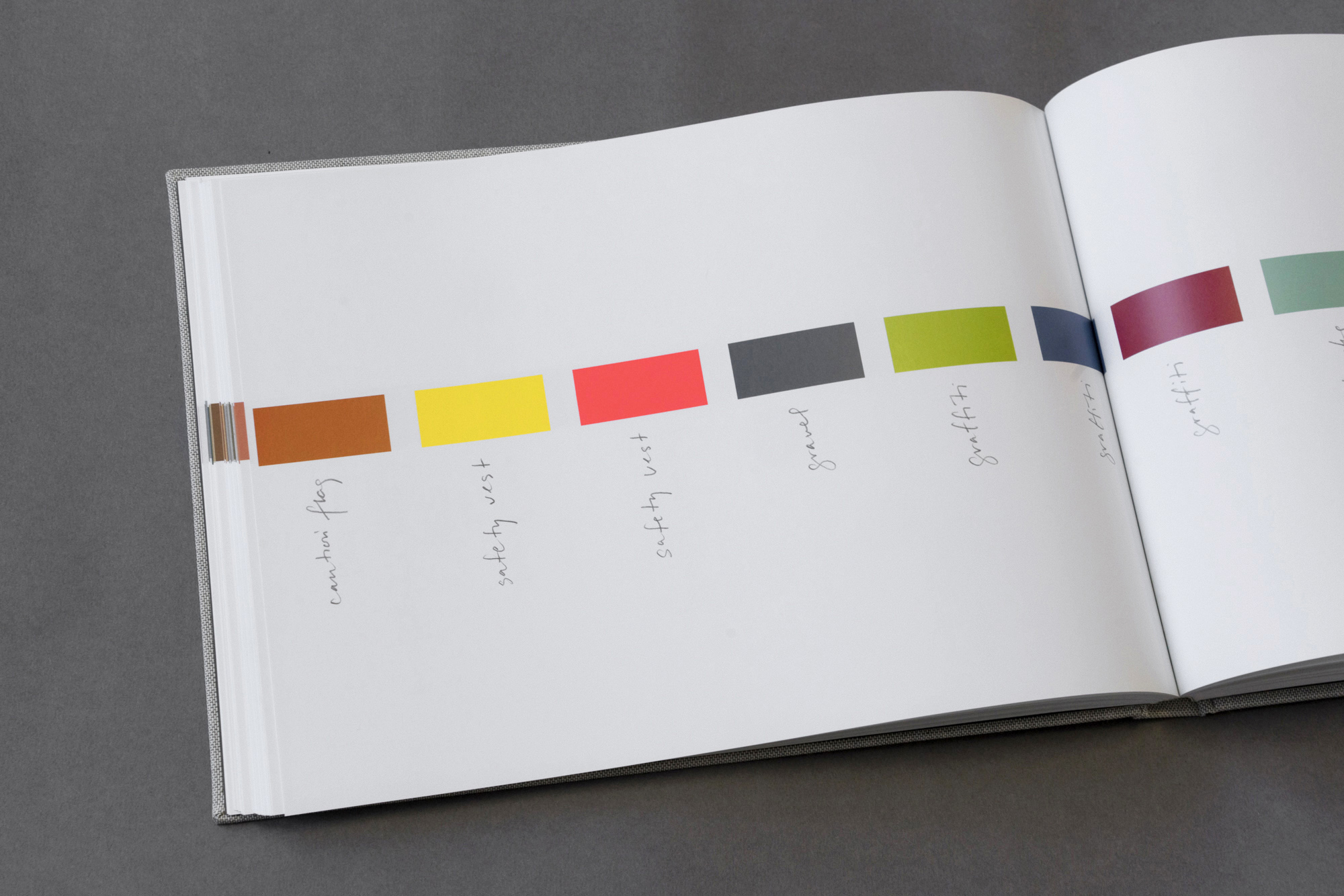
Spencer Finch, Ulysses, 2016
Spencer Finch
Ulysses, 2016
A Record of a walk through New York City on September 19, 2004
Case bound hardcover
8.57 x 12.25 inches
220 Pages
Concept and Art by Spencer Finch; design by Flat Fix; published by Trying to Press, Brooklyn, NY

Deliverable

Upload an image of your color collection to the Google Slides template (see link at top of the page) for this assignment under your name.

Grading

Assignment grades will be based on the following:

Aesthetic Principles (40%)

Student demonstrates evidence that they understand and inventively integrate aesthetic principles.

  • Excellent: Student employs the aesthetic principles addressed in class to create work that is individual and engaging.
  • Average: Student is able to rotely employ the principles addressed in class to create a standard project, but not make it their own.
  • Below Average: Student struggles to demonstrate a grasp of the principles and shows no facility in internalizing the ideas.
Labor and Technique (40%)

Student works fastidiously to apply appropriate techniques to the project and shows a growing facility with those techniques. The student’s labor is evident and ample given the allotted time.

  • Excellent: Student understands demonstrated techniques and nimbly employs them in their work.
  • Average: Student makes some stylistic and technical mistakes by ignoring provided guidance.
  • Below Average: Student repeatedly makes the same mistakes and ignores instructor input and suggestions.
Following Instructions (10%)

The student adheres to the guidelines provided for the course and the assignment. If the project has a particular framework, the student adheres to that framework. If an assignment is to be submitted on a Google Slide, the student does not email the instructor a JPG.

  • Excellent: A detail-oriented student who takes instruction and fastidiously executes it within their work.
  • Average: A student who misses some details because they didn’t read instructions thoroughly or take proper notes when instructions were given.
  • Below Average: Student ignores basic instructions and guidance given for assignments.
Reflection (10%)

Student notes on critiques along with personal reflection on their projects show a growing sense of awareness of how their work can be received and understood.

  • Excellent: Student diligently takes notes during critiques, noting the core concerns of the critics, and expresses their own views thoughtful and honest self assessment.
  • Average: Student’s critique notes address only surface concerns and/or their own self reflection writing is hurried and vague.
  • Below Average: Student does not take good notes and their self assessment is incomplete or dishonest.
On-time Submission

Work that is not present for a synchronous critique, or is too late for an asynchronous critique will lose points under the Reflection category for not having notes from the critique.

Why?

Not only is this meant to take your color matching skills up a notch, but also to think about the conceptual side of compositions, aesthetics, and methodology.

Learning Outcomes Addressed

Spatial Skills

Students will be able to generate, organize and communicate ideas in two-dimensional space using basic principles of color and composition.

Technical Skills

Students will be able to employ various digital and analog techniques to realize and evaluate aesthetic compositions.

Aesthetic Sensibilities

Students will be able to create two-dimensional compositions of varying sensibilities and articulate their appreciation of others’ art.

Project: 80%

Due: , 11:59pm
At a Glance: Take your least favorite collage from the last assignment, destroy 80% of it, then build it back as a new composition.
Working Size: The longest dimension should be no smaller than 10 inches.
JPG Size: 1920px at its longest dimension, no larger than 3MB
Submit via: Google Slides and in class

Brief

Select your least favorite collage from the last assignment and destroy 80% of it. You may tear it, paint over it, burn it (but be careful), sand it down, or deface it in any way. You can destroy it piece-by-piece or with one grand gesture. Don’t worry about making it look good at this point. Just focus on eradicating things. Then you will go back into it and build it back up into a new composition—responding to what is left and adding to it. You may transfer it to a new piece of paper, make the work three-dimensional, or leave it on the original paper. You may use whatever mediums you want when you build up the new composition.

You have leeway in the colors and the type of composition you utilize. This is where you have some freedom to employ the appropriate tools (literal and figurative) you have.

Materials

  • Whatever it takes

Deliverable

Upload your image of your completed composition to the Google Slides template (see link at top of the page) for this assignment under your name.

Grading

Assignment grades will be based on the following:

Aesthetic Principles (40%)

Student demonstrates evidence that they understand and inventively integrate aesthetic principles.

  • Excellent: Student employs the aesthetic principles addressed in class to create work that is individual and engaging.
  • Average: Student is able to rotely employ the principles addressed in class to create a standard project, but not make it their own.
  • Below Average: Student struggles to demonstrate a grasp of the principles and shows no facility in internalizing the ideas.
Labor and Technique (40%)

Student works fastidiously to apply appropriate techniques to the project and shows a growing facility with those techniques. The student’s labor is evident and ample given the allotted time.

  • Excellent: Student understands demonstrated techniques and nimbly employs them in their work.
  • Average: Student makes some stylistic and technical mistakes by ignoring provided guidance.
  • Below Average: Student repeatedly makes the same mistakes and ignores instructor input and suggestions.
Following Instructions (10%)

The student adheres to the guidelines provided for the course and the assignment. If the project has a particular framework, the student adheres to that framework. If an assignment is to be submitted on a Google Slide, the student does not email the instructor a JPG.

  • Excellent: A detail-oriented student who takes instruction and fastidiously executes it within their work.
  • Average: A student who misses some details because they didn’t read instructions thoroughly or take proper notes when instructions were given.
  • Below Average: Student ignores basic instructions and guidance given for assignments.
Reflection (10%)

Student notes on critiques along with personal reflection on their projects show a growing sense of awareness of how their work can be received and understood.

  • Excellent: Student diligently takes notes during critiques, noting the core concerns of the critics, and expresses their own views thoughtful and honest self assessment.
  • Average: Student’s critique notes address only surface concerns and/or their own self reflection writing is hurried and vague.
  • Below Average: Student does not take good notes and their self assessment is incomplete or dishonest.
On-time Submission

Work that is not present for a synchronous critique, or is too late for an asynchronous critique will lose points under the Reflection category for not having notes from the critique.

Why?

Rigid assignments can be easy because they eliminate decisions. It can be difficult to make choices and decide how to proceed when you have more free reign. It can also be hard to let go of a project that represents your hard work. This project is designed to help you grow as an autonomous artist, and break free of just being a student.

Learning Outcomes Addressed

Spatial Skills

Students will be able to generate, organize and communicate ideas in two-dimensional space using basic principles of color and composition.

Technical Skills

Students will be able to employ various digital and analog techniques to realize and evaluate aesthetic compositions.

Aesthetic Sensibilities

Students will be able to create two-dimensional compositions of varying sensibilities and articulate their appreciation of others’ art.

Exam 2: Color Theory and Elements of Design

Due: , 11:59am
Detail: This exam covers subtractive color theory and elements of design.
Exam Location: Learning Suite

Brief

This exam covers material pertinent to subtractive color theory and elements of design presented in class. This exam is “open book,” meaning that you may refer to your notes, the PDF of the presentations, and the video recording of the presentations (available via the “Resources” link at the top of the page under “Course Box.”) You may save, exit, and return to the exam. It is not timed. You may take the exam twice, and Learning Suite will save your highest score.

Learning Outcomes Addressed

Spatial Skills

Students will be able to generate, organize and communicate ideas in two-dimensional space using basic principles of color and composition.

Aesthetic Sensibilties

Students will be able to create two-dimensional compositions of varying sensibilities and articulate their appreciation of others’ art.

Online Critiques

Due: Each class period. See the course schedule for specifics.
At a Glance: Write a brief, but substantive critique of one work from two different classmates. See details below.
Submit via: Write your commments on the appropriate assignment’s Google Slides

Brief

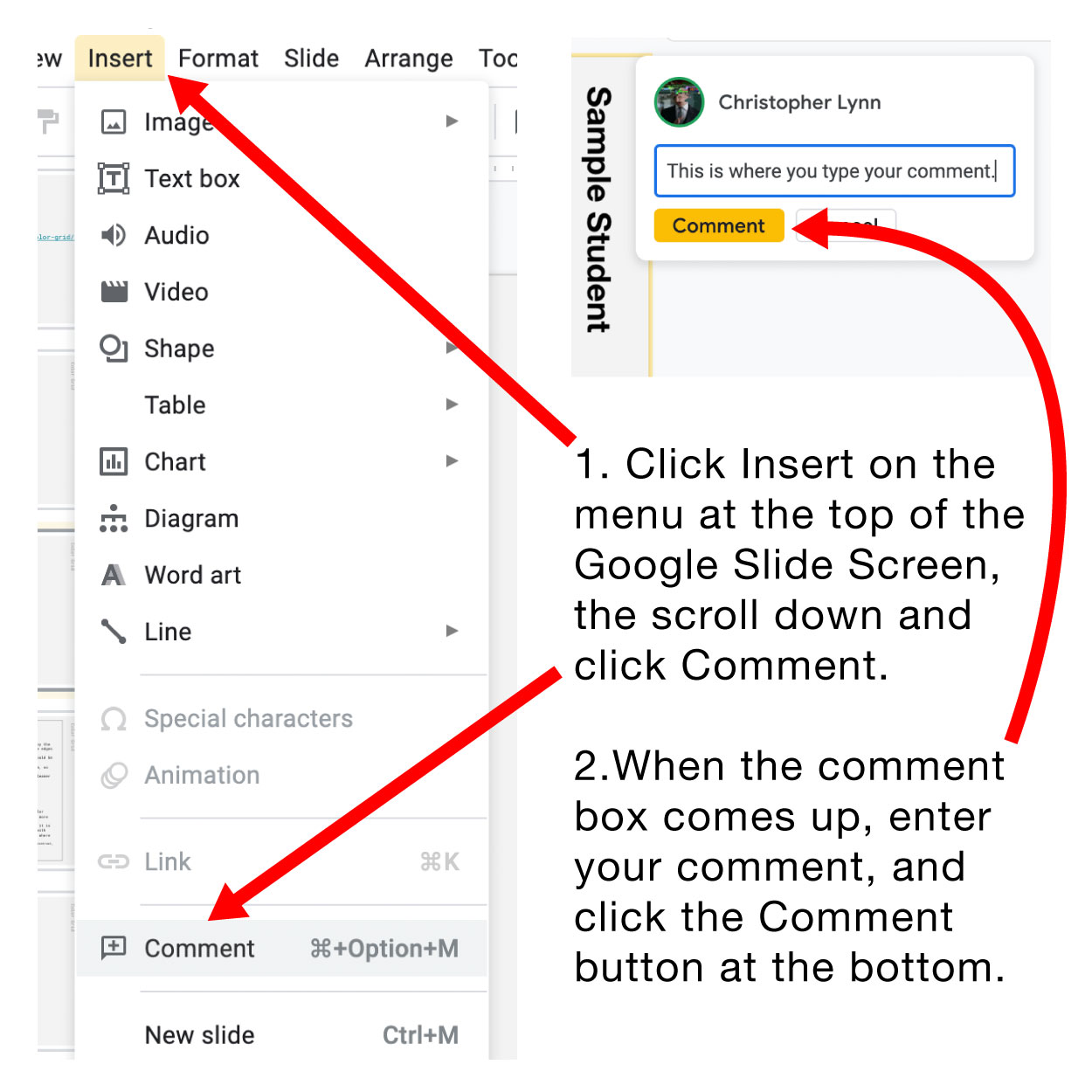
You will write one substantive critique for two different students in class (two comments in total). These comments will be made on their project’s Google Slide. See instructions below for more details.

You will write comments for the two students above you in the Slides. Take this list of students on the slides for example:

  • Sample Student
  • Applebroog, Ida
  • Eitzel, Mark
  • Finn, Neil
  • Rojas, Claire
  • Sherman, Cindy
  • Tiravanija, Rirkrit
  • Vives, Carlos

If you are Claire Rojas, you would critique one work by Neil Finn and one work by Mark Eitzel. If Mark didn’t submit anything for the assignment, then go up to the next student: Ida Applebroog. If Ida also didn’t submit an assignment, then you would skip the Sample Student (obviously), and loop around to the end of thee list and critique a work by Carlos Vives. If you were Ida Applebroog, you would critique work from Carlos Vives and Rirkrit Tiravanija.

After the critiques are completed, you will need to then write your reflections on your work, summarizing key observations by your classmates, and have those submitted by Friday each week. Since you will need to address the areas of the D.I.E. method in your reflection, make sure you try include those areas in your critiques.

Illustrated Instructions for Google Slides

Example

See the Sample Student slides for the Composition Thumbnails assignment for example critique comments.

Deliverable

Submit your critiques as comments on Google Slides.

Grading

Assignment grades will be based on the following:

  • Completion
  • Helpful an insightful comments

Why?

Being able to make art is one thing, but being able to recognize and constructively articulate strengths and weaknesses in your work and others will help you to grow as an artist and as a human being.

Learning Outcomes Addressed

Aesthetic Sensibilities

Students will be able to create two-dimensional compositions of varying sensibilities and articulate their appreciation of others’ art.

Project: False Transparency

Due: , 11:59pm
At a Glance: Make six new compositions—4 using Photopea to add digital transparency to your 3D-2D Color Space selections, plus 2 physical collages replicating your Photopea transparency compositions.
Working Size: Physical collages should be no smaller than five inches at their largest dimension.
JPG Size: 1920px at its longest dimension, no larger than 3MB
Submit via: Google Slides and in class

Brief

Take two of your favorite compositions from the 3D/2D project and import them into PhotoPea. Add transparent overlays in different shapes to create four new studies—two new transparency studies per original composition.

Next, select two of your favorites from the transparency studies. Using paint, paper, an X-acto knife, and a gluestick, translate these two PhotoPea studies into physical form to create “false transparency” compositions. Match the colors from the PhotoPea studies, do not alter them. This is partly an exercise in color matching.

Use your acrylic paints to match the colors you see on your screen—creative swatches of color you can cut to the right size and glue down to your larger sheet of paper. Do not paint over your collage! Your new collages should be no smaller than five inches at their largest dimension and placed neatly on a larger sheet of paper.

Materials

  • Paper
  • Pencil
  • Acrylic paints
  • Painter’s knife
  • Brushes
  • Disposable palette
  • Cups or jars for water
  • Rags or paper towels for clean up
  • Soap or shampoo for cleaning brushes
  • Scissors and/or X-acto knife
  • Cutting board / self-heealing mat
  • Glue and/or tape

Example

Erin O'Keefe works transformed through transparencies
Erin O’Keefe works transformed through transparencies

Deliverable

Upload all six of your images to the Google Slides template (see link at top of the page) for this assignment under your name. If you can, place your digital transparency image on the same slide alongside your physical collage that is replicating it. If they don’t fit neatly next to each other, place them on neighboring slides.

Grading

Assignment grades will be based on the following:

Aesthetic Principles (40%)

Student demonstrates evidence that they understand and inventively integrate aesthetic principles.

  • Excellent: Student employs the aesthetic principles addressed in class to create work that is individual and engaging.
  • Average: Student is able to rotely employ the principles addressed in class to create a standard project, but not make it their own.
  • Below Average: Student struggles to demonstrate a grasp of the principles and shows no facility in internalizing the ideas.
Labor and Technique (40%)

Student works fastidiously to apply appropriate techniques to the project and shows a growing facility with those techniques. The student’s labor is evident and ample given the allotted time.

  • Excellent: Student understands demonstrated techniques and nimbly employs them in their work.
  • Average: Student makes some stylistic and technical mistakes by ignoring provided guidance.
  • Below Average: Student repeatedly makes the same mistakes and ignores instructor input and suggestions.
Following Instructions (10%)

The student adheres to the guidelines provided for the course and the assignment. If the project has a particular framework, the student adheres to that framework. If an assignment is to be submitted on a Google Slide, the student does not email the instructor a JPG.

  • Excellent: A detail-oriented student who takes instruction and fastidiously executes it within their work.
  • Average: A student who misses some details because they didn’t read instructions thoroughly or take proper notes when instructions were given.
  • Below Average: Student ignores basic instructions and guidance given for assignments.
Reflection (10%)

Student notes on critiques along with personal reflection on their projects show a growing sense of awareness of how their work can be received and understood.

  • Excellent: Student diligently takes notes during critiques, noting the core concerns of the critics, and expresses their own views thoughtful and honest self assessment.
  • Average: Student’s critique notes address only surface concerns and/or their own self reflection writing is hurried and vague.
  • Below Average: Student does not take good notes and their self assessment is incomplete or dishonest.
On-time Submission

Work that is not present for a synchronous critique, or is too late for an asynchronous critique will lose points under the Reflection category for not having notes from the critique.

Why?

Color matching is a crucial skill, not only when working representationally to mimic what you see, but sometimes you need to go back into a painting to touch up an area, and the new paint needs to match the old paint. Trying to mimic a transparency forces your mind to think of the colors abstractly, and not as transparencies so you can recreate them appropriately.

Learning Outcomes Addressed

Spatial Skills

Students will be able to generate, organize and communicate ideas in two-dimensional space using basic principles of color and composition.

Technical Skills

Students will be able to employ various digital and analog techniques to realize and evaluate aesthetic compositions.

Aesthetic Sensibilities

Students will be able to create two-dimensional compositions of varying sensibilities and articulate their appreciation of others’ art.

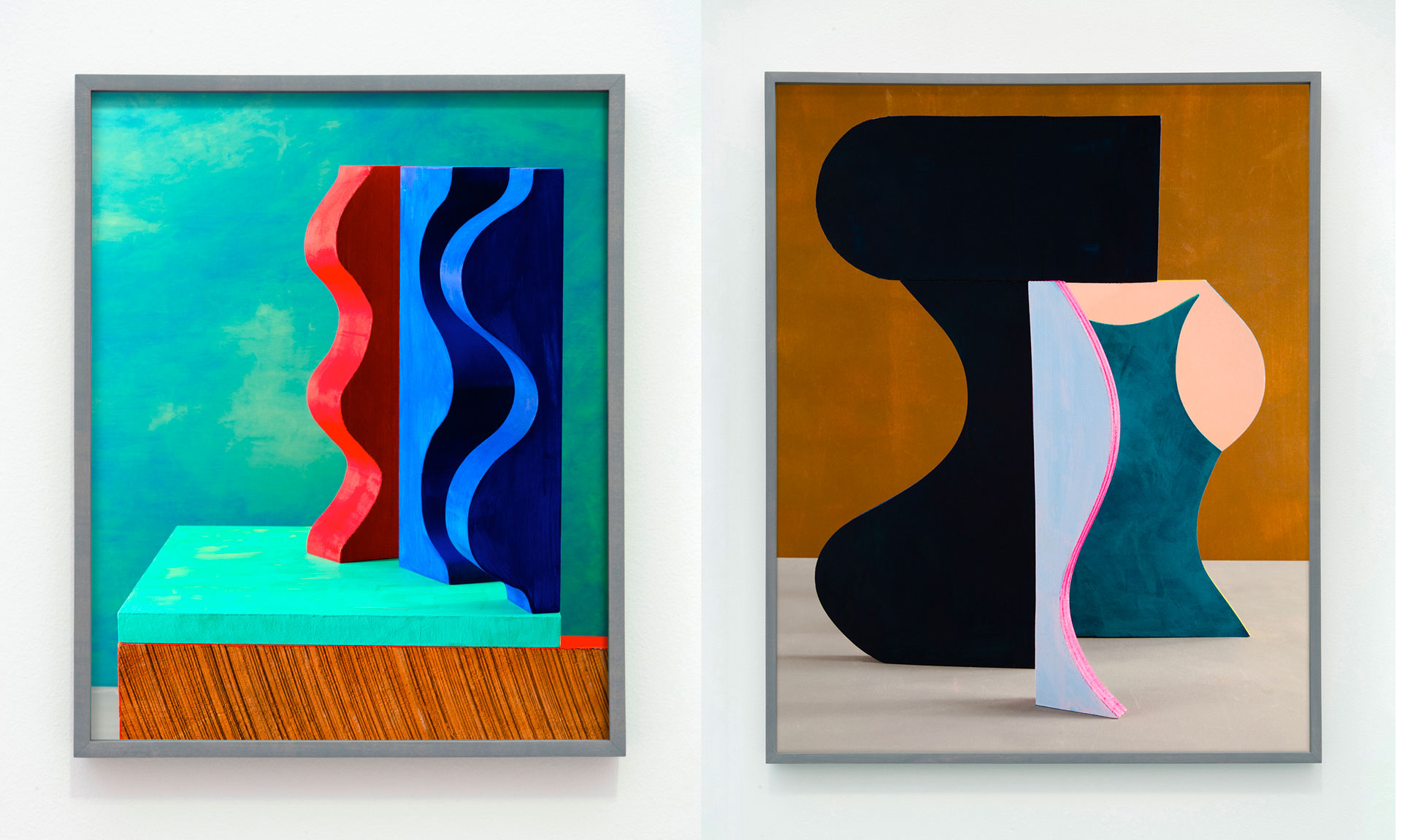
Project: 3D-2D Color Space

Due: , 11:59pm
At a Glance: Make at least two 3D color objects + a background and set it all up in a 3D scene to create five different photographic compositions (2D)
Working Size: That’s up to you
JPG Size: 1920px at its longest dimension, no larger than 3MB
Submit via: Google Slides and in class

Brief

Make at least two 3D color objects plus a background and set it all up in a 3D scene to create five different photographic compositions (2D). Each object and the background should be monochromatic, extending the hue through shades, tones, and tints. Each object and the background should be a different hue. For each image, you may rearrange the objects, change the camera angle, and/or alter the lighting. Recall the various elements of composition and gestalt to come up with intriguing compositions. At least two compositions should be open, and at least two should be closed. At least one element—object or background—should employ pattern or texture.

Think creatively about how to make your 3D objects. Use cereal boxes, bottles, cut paper, origami, blocks of wood, rocks, etc. Paint your objects, wrap them in colored paper, and so on. Do not use pre-manufactured/readymade items. All these items should be things that you have made or significantly altered. The only exception may be using wrapping paper or fabric. The items can be quite large, or very small. Consider placing the objects at extremes—close up and far away, far left and right, top and bottom. Turn your camera sideways or upside down, or photograph your items from above or below to impact the composition and undermine the expectation of gravity.

Consider contrasts within the work and how contrasts can be created through lighting. Lighting will impact your colors through shadows, highlights, and reflection.

Materials

  • Paper
  • Pencil
  • Acrylic paints
  • Painter’s knife
  • Brushes
  • Disposable palette
  • Cups or jars for water
  • Rags or paper towels for clean up
  • Soap or shampoo for cleaning brushes
  • Scissors and/or X-acto knife
  • Glue and/or tape
  • Material to make 3D objects

Example

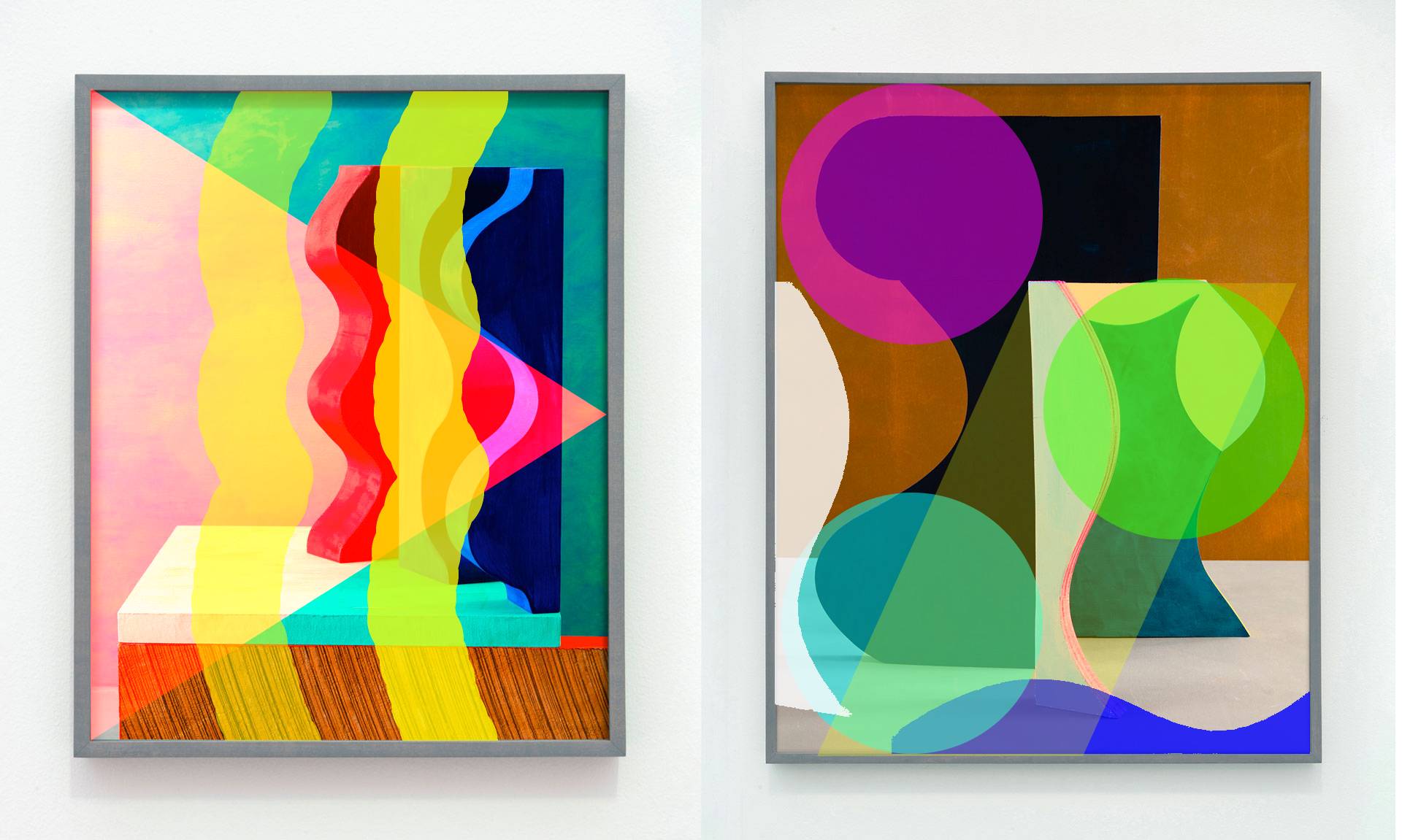
Erin O'Keefe
Left: Erin O’Keefe
Wild Bunch, 2019
Archival pigment print
20 x 16 in. (51 x 41 cm)
Right: Esther, 2019
Archival pigment print
40 × 32 in. (102 × 81 cm)

The work of Erin O’Keefe is the inspiration for this assignment.

Deliverable

Upload your images to the Google Slides template (see link at top of the page) for this assignment under your name.

Grading

Assignment grades will be based on the following:

Aesthetic Principles (40%)

Student demonstrates evidence that they understand and inventively integrate aesthetic principles.

  • Excellent: Student employs the aesthetic principles addressed in class to create work that is individual and engaging.
  • Average: Student is able to rotely employ the principles addressed in class to create a standard project, but not make it their own.
  • Below Average: Student struggles to demonstrate a grasp of the principles and shows no facility in internalizing the ideas.
Labor and Technique (40%)

Student works fastidiously to apply appropriate techniques to the project and shows a growing facility with those techniques. The student’s labor is evident and ample given the allotted time.

  • Excellent: Student understands demonstrated techniques and nimbly employs them in their work.
  • Average: Student makes some stylistic and technical mistakes by ignoring provided guidance.
  • Below Average: Student repeatedly makes the same mistakes and ignores instructor input and suggestions.
Following Instructions (10%)

The student adheres to the guidelines provided for the course and the assignment. If the project has a particular framework, the student adheres to that framework. If an assignment is to be submitted on a Google Slide, the student does not email the instructor a JPG.

  • Excellent: A detail-oriented student who takes instruction and fastidiously executes it within their work.
  • Average: A student who misses some details because they didn’t read instructions thoroughly or take proper notes when instructions were given.
  • Below Average: Student ignores basic instructions and guidance given for assignments.
Reflection (10%)

Student notes on critiques along with personal reflection on their projects show a growing sense of awareness of how their work can be received and understood.

  • Excellent: Student diligently takes notes during critiques, noting the core concerns of the critics, and expresses their own views thoughtful and honest self assessment.
  • Average: Student’s critique notes address only surface concerns and/or their own self reflection writing is hurried and vague.
  • Below Average: Student does not take good notes and their self assessment is incomplete or dishonest.
On-time Submission

Work that is not present for a synchronous critique, or is too late for an asynchronous critique will lose points under the Reflection category for not having notes from the critique.

Why?

Many two-dimensional art practices are actually based in three dimensions. For example, much of photography concerns itself with translating three-dimensional space to two dimensions. Drawing and painting often do this as well. It is important to understand how color works in three dimensions, and how that gets translated to two.

Learning Outcomes Addressed

Spatial Skills

Students will be able to generate, organize and communicate ideas in two-dimensional space using basic principles of color and composition.

Technical Skills

Students will be able to employ various digital and analog techniques to realize and evaluate aesthetic compositions.

Aesthetic Sensibilities

Students will be able to create two-dimensional compositions of varying sensibilities and articulate their appreciation of others’ art.